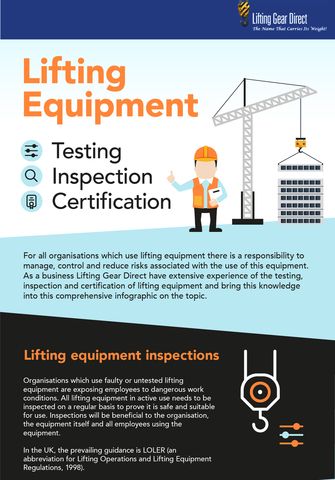
Lifting equipment sits at the intersection of productivity and safety. A crane, hoist, sling, or below-the-hook device that fails unexpectedly does more than halt a production line—it introduces unacceptable risk to personnel and assets. For engineering, maintenance, and EHS leaders, a disciplined maintenance program is not a compliance checkbox; it is an operational control. This guide outlines the common maintenance requirements that apply across most industrial lifting equipment, with practical guidance on inspection intervals, documentation, and program governance.
Why Maintenance Requirements Matter
Regulatory frameworks vary by jurisdiction—OSHA and ASME in the United States, LOLER in the United Kingdom, and similar regimes elsewhere—but the underlying engineering logic is consistent. Lifting equipment is exposed to cyclic loading, wear, corrosion, and environmental stress. Without structured inspection and servicing, degradation remains invisible until it becomes failure. A formal maintenance program delivers three outcomes:
- Risk reduction: Early detection of worn wire ropes, cracked hooks, deformed shackles, and brake drift prevents catastrophic failure.
- Regulatory compliance: Documented inspections and repairs demonstrate due diligence during audits and incident investigations.
- Asset longevity: Planned servicing extends equipment life and reduces unplanned downtime and capital replacement costs.
Core Maintenance Categories
Most mature programs organize maintenance activity into four tiers. Each tier has a distinct purpose, owner, and documentation standard.
1. Pre-Use Checks
Performed by the operator before each shift or use cycle, pre-use checks are visual and functional. They are not a substitute for formal inspection but catch obvious defects before equipment enters service.
- Visual examination of hooks, latches, slings, and rigging hardware for deformation, cracks, or excessive wear.
- Verification of wire rope condition—broken wires, kinks, bird-caging, or corrosion.
- Functional test of brakes, limit switches, and control response.
- Confirmation that rated capacity markings and tags are legible and present.
2. Periodic Inspections
Periodic inspections are conducted by a competent person at defined intervals—typically monthly to quarterly for heavy-use equipment, and at least annually for all equipment. Frequency should be risk-based, accounting for duty cycle, environment, and criticality.
- Detailed inspection of structural members for cracks, corrosion, and weld integrity.
- Measurement of hook throat openings and wear against manufacturer limits.
- Inspection of sheaves, drums, and rope reeving for alignment and groove wear.
- Verification of fasteners, pins, and locking devices.
- Load testing where required by regulation or after significant repair.
3. Preventive Maintenance and Servicing
Preventive maintenance follows manufacturer schedules and addresses wear components before failure. This is where reliability engineering adds measurable value.
- Lubrication of wire ropes, bearings, gears, and pivot points per OEM specification.
- Brake adjustment and lining inspection; replacement at defined wear thresholds.
- Hydraulic system servicing—fluid analysis, filter changes, hose inspection, and pressure verification.
- Electrical system checks—contactor condition, overload protection calibration, and control pendant integrity.
- Replacement of consumables such as slings, shackles, and limit switch components at end-of-life criteria.
4. Periodic Thorough Examination
Many jurisdictions require a documented thorough examination by an independent competent person at statutory intervals—commonly six or twelve months, with more frequent examination for equipment used in demanding applications or for lifting personnel. This examination is distinct from routine maintenance and should be scheduled as a formal event with a written report.
Recommended Inspection Interval Reference
The table below summarizes typical baseline intervals. Always defer to local regulation and manufacturer requirements where they are more stringent.
| Pre-use visual and functional check | Each shift / before use | Operator | Checklist or logbook entry |
| Periodic inspection | Monthly to quarterly (risk-based) | Competent person | Inspection record |
| Preventive maintenance servicing | Per OEM schedule (often 250–500 operating hours) | Maintenance technician | Service work order |
| Thorough examination | 6 or 12 months (statutory) | Independent examiner | Formal examination report |
| Load test | After major repair or per regulation | Qualified tester | Load test certificate |
Documentation and Recordkeeping
Records are the backbone of an auditable program. Each piece of lifting equipment should carry a unique identifier and a maintenance history that includes inspection findings, corrective actions, parts replaced, and examiner identity. Digital maintenance management systems reduce administrative burden and enable trend analysis—for example, flagging equipment with recurring brake adjustments as a candidate for overhaul. Retain records for the period required by regulation, and make them readily retrievable during inspections or investigations.
Common Maintenance Failures to Avoid
Building a Sustainable Program
Effective lifting equipment maintenance is a system, not a series of tasks. Define equipment inventories and criticality tiers, assign competent ownership for each maintenance category, standardize checklists against OEM and regulatory criteria, and review program performance quarterly. Where possible, integrate inspection data with computerized maintenance management systems to automate scheduling and surface emerging trends.
Organizations that treat maintenance as an engineering discipline—measured, documented, and continuously improved—consistently outperform those that react to failures. The requirements outlined here provide a practical baseline; tailor intervals and procedures to your equipment, environment, and regulatory obligations, and validate the program through periodic audit.
Leave a Reply