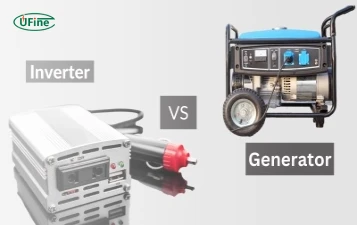
When it comes to securing a reliable power supply—whether for your home, your business, or your next off-grid adventure—the terminology can quickly become confusing. Two terms dominate the conversation: generators and inverters. While both deliver electricity, they operate on fundamentally different principles, serve different purposes, and carry distinct trade-offs. Understanding these differences is essential for making a smart, cost-effective investment. This guide breaks down the key distinctions so you can choose the right solution for your power needs.
What Is a Generator?
A generator is an electromechanical device that converts mechanical energy into electrical energy. Most conventional generators rely on an internal combustion engine—powered by gasoline, diesel, propane, or natural gas—to spin an alternator, which produces alternating current (AC) electricity. In simple terms, a generator creates power on demand by burning fuel.
Generators are the go-to choice for high-wattage applications. They can power refrigerators, HVAC systems, power tools, and even entire buildings during an outage. However, they come with well-known drawbacks: noise, exhaust emissions, fuel dependency, and regular maintenance requirements.
What Is an Inverter?
An inverter, by contrast, does not generate electricity—it converts it. An inverter takes direct current (DC) from a battery bank or solar panels and transforms it into usable AC power for your appliances and electronics. Inverter technology produces a cleaner, more stable sine wave, which makes it ideal for sensitive equipment such as computers, medical devices, and modern appliances.
Inverters are silent, emit no fumes, and require minimal maintenance. Their limitation, however, is that they depend on an energy storage source. Without charged batteries or a connected power source, an inverter has nothing to convert.
Core Differences at a Glance
The table below summarizes the most important distinctions between the two technologies.
| Primary Function | Generates electricity from fuel | Converts DC power to AC power |
| Power Source | Gasoline, diesel, propane, natural gas | Batteries or solar panels |
| Noise Level | Moderate to high | Silent operation |
| Emissions | Produces exhaust fumes | Zero emissions |
| Maintenance | Regular (oil, fuel, filters) | Minimal |
| Power Output | High, sustained wattage | Depends on battery capacity |
| Best For | Extended outages, heavy loads | Sensitive electronics, portable use, solar setups |
How They Work: A Deeper Look
Generator Operation
A fuel-powered engine drives an alternator, inducing an electrical current through electromagnetic induction. The output is typically a modified sine wave, which is adequate for motors and resistive loads but can cause issues with delicate electronics. Inverter generators—a hybrid category—add a rectifier and inverter stage to produce clean power, combining fuel-based generation with inverter-grade output quality.
Inverter Operation
An inverter receives DC power and uses electronic switching circuits to synthesize an AC waveform. Pure sine wave inverters replicate utility-grade power closely, while modified sine wave models are more economical but less compatible with sensitive devices. Inverter systems are often paired with solar panels and battery banks to form complete off-grid or backup power solutions.
Performance and Power Quality
Power quality is a decisive factor for many buyers. Inverters—particularly pure sine wave models—deliver clean, stable electricity that protects delicate electronics. Conventional generators can produce voltage fluctuations and harmonic distortion, which may shorten the lifespan of sensitive equipment. If your priority is protecting computers, audio gear, or medical devices, inverter-based solutions are the safer bet.
Cost Considerations
Upfront cost and total cost of ownership tell different stories:
- Generators typically have a lower purchase price per watt but incur ongoing fuel and maintenance costs.
- Inverters often cost more initially when paired with batteries, but they operate cheaply—especially when integrated with solar—and require little maintenance.
- Inverter generators occupy a middle ground: higher price than conventional generators, but cleaner power and better fuel efficiency.
Use Cases: Which One Fits Your Needs?
Choose a generator if you need:
- Sustained high wattage for extended periods
- Whole-home or job-site backup power
- Independence from battery storage capacity
Choose an inverter if you need:
- Silent, emission-free operation indoors or in enclosed spaces
- Clean power for sensitive electronics
- A solar-ready or battery-based backup system
- Portable power for camping, RVs, or mobile setups
Safety and Environmental Impact
Generators must never be operated indoors or in enclosed spaces due to carbon monoxide risks—a critical safety consideration. They also contribute to noise pollution and fossil fuel emissions. Inverters, being silent and emission-free, are inherently safer for indoor use and far more environmentally friendly, particularly when charged by renewable sources.
Can You Combine Them?
Absolutely. Many modern power systems integrate both technologies: a generator charges a battery bank, and an inverter converts that stored energy into clean AC power. This hybrid approach delivers the endurance of a generator with the power quality and silence of an inverter—an increasingly popular configuration for homes and businesses seeking resilience.
Final Verdict
There is no universal winner in the generators versus inverters debate—only the right tool for the right job. Generators excel at raw, sustained power generation during prolonged outages and heavy-load scenarios. Inverters shine in clean, quiet, efficient power conversion, especially within battery and solar systems. Evaluate your load requirements, runtime expectations, budget, and sensitivity of your equipment. In many cases, the smartest solution is not choosing between the two—but deploying them together.
Leave a Reply