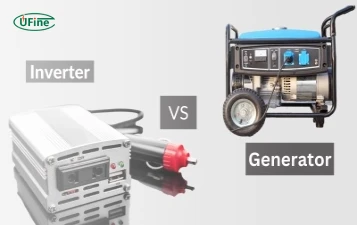
When it comes to securing a reliable power supply—whether for your home, your business, or your next off-grid adventure—the terminology can quickly become confusing. Two terms dominate the conversation: generators and inverters. While both deliver electricity, they operate on fundamentally different principles, serve different purposes, and carry distinct trade-offs. (more…)
Category: Power Tools and Hand Tools
-
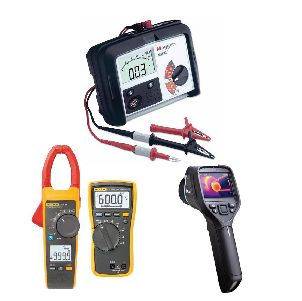
Types of Electrical Testing Equipment and Their Uses
Electrical testing equipment is the backbone of safe, reliable, and compliant electrical work. From verifying the integrity of a single circuit to commissioning an entire industrial facility, the right instruments determine whether diagnostics are accurate, maintenance is proactive, and hazards are eliminated before they become failures. (more…)
-
How to Choose the Right Electrical Equipment for Your Business
Electrical equipment is the backbone of nearly every modern business. From powering critical servers in a data center to running heavy machinery on a factory floor, the reliability and safety of your electrical infrastructure directly influence operational continuity, energy costs, and regulatory compliance. (more…)
-

Essential Electrical Equipment for Industrial Facilities
Industrial facilities operate under demanding conditions where electrical reliability is not a convenience but a operational necessity. A single point of failure in the power infrastructure can halt production lines, compromise safety systems, and generate substantial financial losses. For engineers, facility managers, and procurement specialists, understanding the essential electrical equipment that forms the backbone of an industrial installation is fundamental to designing resilient, efficient, and compliant operations. (more…)
-
New Technologies in Industrial Lifting Equipment
Industrial lifting equipment has long been the backbone of manufacturing, construction, logistics, and heavy industry. For decades, overhead cranes, hoists, and forklifts operated on well-established mechanical principles with only incremental improvements. That era is ending. A convergence of digital sensing, advanced materials, electrification, and intelligent control systems is transforming lifting equipment from brute-force machinery into connected, data-driven assets. (more…)
-
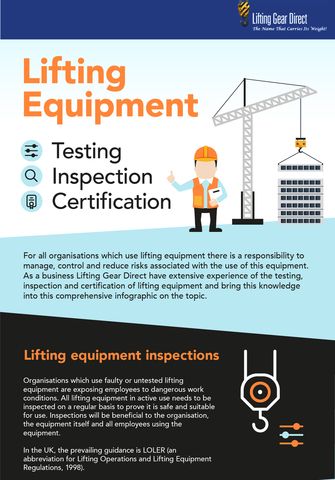
Common Lifting Equipment Maintenance Requirements: A Technical Guide for Operations Teams
Lifting equipment sits at the intersection of productivity and safety. A crane, hoist, sling, or below-the-hook device that fails unexpectedly does more than halt a production line—it introduces unacceptable risk to personnel and assets. For engineering, maintenance, and EHS leaders, a disciplined maintenance program is not a compliance checkbox; it is an operational control. (more…)
-
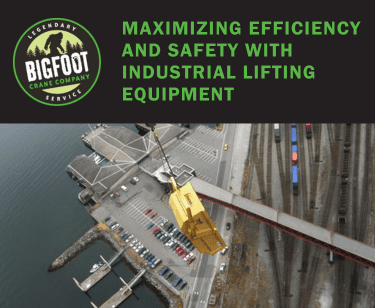
How Lifting Equipment Improves Workplace Efficiency
In industrial and commercial environments, efficiency is not simply a matter of working faster. It is a function of moving materials safely, reducing wasted motion, and protecting the workforce from injury. Lifting equipment sits at the center of that equation. From overhead cranes and hoists to pallet jacks, lift tables, and vacuum lifters, the right equipment transforms physically demanding tasks into controlled, repeatable operations. (more…)
-
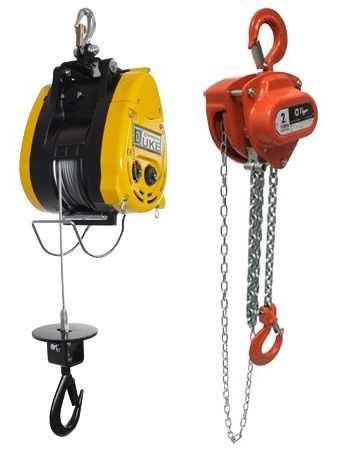
Electric vs Manual Hoists: Which Is Better for Your Needs?
Choosing the right hoist is a decision that directly affects productivity, safety, and long-term operating costs. Whether you are outfitting a workshop, a manufacturing floor, or a maintenance facility, the choice between electric and manual hoists deserves careful analysis. Both options have distinct strengths, and the “better” choice depends entirely on your lifting requirements, duty cycles, and budget. (more…)