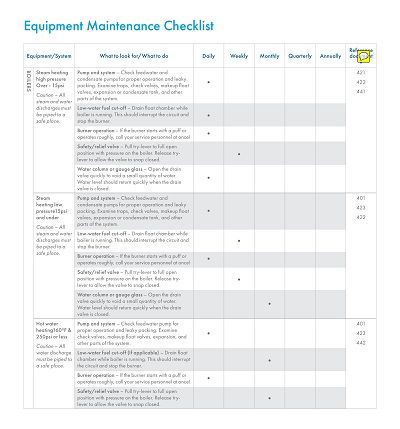
In the technology sector, equipment reliability is not a luxury—it is a baseline expectation. Whether you manage a data center, a fleet of field devices, or a manufacturing floor powered by automated machinery, unplanned downtime erodes revenue, damages customer trust, and inflates operational costs. The most effective defense against failure is not reactive repair but disciplined, repeatable maintenance. This article presents a structured equipment maintenance checklist designed to help technical teams improve reliability, extend asset lifespan, and reduce total cost of ownership.
Why a Checklist Approach Works
Maintenance performed from memory is maintenance performed inconsistently. Human attention is finite, and under time pressure, technicians naturally prioritize the urgent over the important. A checklist enforces standardization, creates an auditable record of work performed, and ensures that no critical inspection step is skipped. In reliability engineering terms, checklists convert tacit knowledge into organizational process—a benefit that persists even as staff turnover occurs.
Key principle: A checklist should be specific enough to guide action but concise enough to be completed consistently. If a checklist takes four hours to fill out, it will be abandoned within a month.
The Core Maintenance Checklist
The following structure applies across most technical equipment categories, including servers, networking hardware, industrial controllers, and lab instruments. Adapt the frequency and depth to the criticality of each asset.
1. Daily and Shift-Level Checks
These are rapid visual and functional inspections performed by operators or on-duty technicians. They are designed to catch anomalies early, before they escalate.
- Visual inspection: Check for warning lights, error codes, physical damage, leaks, corrosion, or unusual wear.
- Environmental conditions: Verify temperature, humidity, and airflow within specified ranges; confirm ventilation paths are unobstructed.
- Noise and vibration: Listen for abnormal fan, motor, or bearing sounds; note any new vibration patterns.
- Fluid and consumable levels: Confirm coolant, lubricant, or toner levels where applicable.
- Log review: Scan system and device logs for recurring errors or warning thresholds.
2. Weekly and Monthly Preventive Tasks
These tasks address gradual degradation that daily checks cannot detect. They typically require partial disassembly, measurement tools, or access to management interfaces.
3. Quarterly and Annual Deep Maintenance
Deep maintenance intervals are where reliability programs are won or lost. These activities require planned downtime or redundancy failover and should be scheduled well in advance.
- Calibration: Recalibrate sensors and measurement instruments against traceable references.
- Thermal imaging: Scan electrical panels and connections for hotspots indicating resistance or overload.
- Battery replacement: Replace UPS and backup batteries on a defined lifecycle, not only upon failure.
- Lubrication and mechanical service: Service motors, bearings, and moving assemblies per the manufacturer schedule.
- Load testing: Validate redundant systems and failover mechanisms under realistic conditions.
- Documentation audit: Update asset registers, maintenance records, and spare parts inventories.
Maintenance Frequency Reference Table
The table below summarizes a recommended cadence by task category. Adjust intervals based on manufacturer specifications, asset criticality, and operating environment.
| Visual and functional inspection | Daily / per shift | Operator or technician | Early anomaly detection |
| Cleaning and consumables | Weekly to monthly | Maintenance technician | Prevent degradation |
| Firmware and configuration review | Monthly | IT or controls engineer | Security and stability |
| Calibration and thermal imaging | Quarterly | Specialist technician | Accuracy and safety |
| Overhaul and load testing | Annually | Maintenance team | Long-term reliability |
Building a Maintenance Culture That Lasts
A checklist is only as effective as the system surrounding it. Three practices separate high-reliability teams from the rest:
- Track metrics: Monitor mean time between failures (MTBF), mean time to repair (MTTR), and checklist completion rates. Data reveals whether maintenance is actually reducing incidents.
- Close the loop: Every anomaly found during inspection should generate a work order, an owner, and a deadline. Findings without follow-up destroy credibility.
- Review and revise: Audit the checklist quarterly. Remove steps that add no value, and add steps informed by failure history.
Remember: the goal is not to complete checklists—it is to prevent failures. Treat each item as a question about the asset’s health, not a box to be ticked.
Conclusion
Reliability is engineered, not hoped for. A disciplined equipment maintenance checklist—layered from daily inspections through annual overhauls, backed by metrics and follow-through—gives technical teams a repeatable path to fewer failures and longer asset life. Start with the checklist above, tailor it to your environment, and commit to consistency. Your uptime numbers will follow.
Leave a Reply