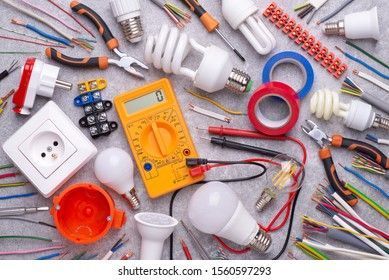
Electrical equipment is the backbone of nearly every modern business. From powering critical servers in a data center to running heavy machinery on a factory floor, the reliability and safety of your electrical infrastructure directly influence operational continuity, energy costs, and regulatory compliance. Yet selecting the right equipment is not a one-size-fits-all exercise. It requires a disciplined evaluation of your facility’s demands, your growth trajectory, and the standards governing your industry. This guide outlines the essential factors decision-makers should weigh before committing capital to electrical equipment.
Start With a Comprehensive Load Assessment
Before evaluating specific products, you must understand the electrical profile of your operation. A professional load assessment quantifies current consumption, identifies peak demand periods, and reveals inefficiencies that may inform equipment sizing.
- Current and projected load: Calculate total connected load and expected simultaneous usage rather than simply summing nameplate ratings.
- Load diversity and duty cycles: Determine how equipment usage patterns affect peak demand and transformer sizing.
- Power quality requirements: Sensitive electronics may demand voltage regulation, harmonic filtering, or uninterruptible power supplies.
- Future expansion: Build in headroom of 20–30% to accommodate growth without premature replacement.
An undersized system invites overheating, nuisance tripping, and accelerated wear. An oversized system wastes capital and may operate inefficiently. Accuracy at this stage pays dividends across the equipment’s entire service life.
Prioritize Safety, Codes, and Certification
Electrical equipment must comply with applicable standards, and verification of certification is non-negotiable. Depending on your jurisdiction and industry, relevant frameworks may include IEC standards, UL listings, NEC requirements, or local building codes.
Beyond compliance, safety features such as surge protection, ground-fault protection, and thermal monitoring reduce the risk of fire and downtime. Cutting corners here creates liability exposure that far outweighs any short-term savings.
Evaluate Efficiency and Total Cost of Ownership
Purchase price is only one component of cost. Energy consumption, maintenance, and expected service life often dwarf the initial outlay. High-efficiency transformers, variable frequency drives, and modern switchgear can deliver substantial savings over a decade of operation.
| Acquisition | Unit price, installation, commissioning | One-time capital expense |
| Energy | Efficiency ratings, standby losses | Recurring monthly expense |
| Maintenance | Service intervals, parts availability | Predictable operating cost |
| Downtime | Reliability record, mean time between failures | Revenue and productivity risk |
Request efficiency data and lifecycle cost projections from vendors, and compare offerings on a like-for-like basis. A slightly higher purchase price for a more efficient unit frequently yields a faster payback than a cheaper alternative.
Match Equipment to Environmental and Operational Conditions
Electrical equipment must withstand the conditions where it will actually operate. Consider temperature extremes, humidity, dust, corrosive atmospheres, and vibration. Enclosure ratings—such as IP or NEMA classifications—should reflect these realities.
- Industrial environments: Specify ruggedized enclosures, sealed components, and filtration where particulates are present.
- Outdoor or remote sites: Account for weather exposure, lightning risk, and remote monitoring capabilities.
- Space constraints: Verify footprint, cable routing, and maintenance access before installation day.
- Noise and heat: Confirm that cooling and acoustic profiles align with the surrounding workspace.
Assess Vendor Reliability and Support
The equipment itself is only half the equation; the vendor relationship determines how quickly issues are resolved. Favor manufacturers with demonstrated expertise in your sector, responsive technical support, and a clear spare-parts strategy.
Plan for Scalability and Integration
Your electrical infrastructure should accommodate tomorrow’s requirements without wholesale replacement. Modular switchgear, scalable power distribution units, and systems with open communication protocols—such as Modbus or Ethernet-based monitoring—simplify future expansion and integration with building management systems.
Where digitization is a priority, consider equipment with embedded sensors and analytics capabilities. These features support predictive maintenance, energy reporting, and faster fault diagnosis, all of which contribute to operational resilience.
Final Recommendations
Choosing electrical equipment for your business demands more than comparing spec sheets. Begin with an accurate load assessment, insist on certified and compliant products, and evaluate total cost of ownership rather than sticker price. Match equipment to your operating environment, vet vendors thoroughly, and design for scalability. By approaching the decision as a long-term infrastructure investment, you protect both your capital and your operational continuity.
Engage a qualified electrical engineer to validate specifications and installation plans before procurement. The cost of expert review is negligible compared with the consequences of an inadequate system.
Leave a Reply