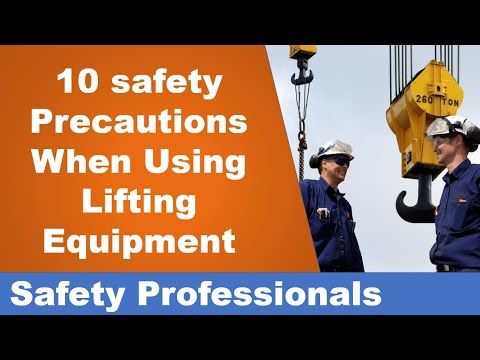
Lifting equipment is the backbone of countless industrial operations, from construction sites and manufacturing floors to warehouses and ports. Yet the same machinery that drives productivity also carries inherent risk. According to industry safety data, incidents involving cranes, hoists, slings, and rigging gear remain among the leading causes of serious workplace injuries. The difference between a safe lift and a catastrophic failure often comes down to discipline, preparation, and adherence to established protocols. This article outlines the essential safety practices every organization should embed into its lifting operations.
The Foundation: Risk Assessment and Planning
No lift should ever begin without a documented plan. A thorough risk assessment identifies potential hazards, determines load weights and center of gravity, and defines the safest method of execution. For complex or critical lifts, a formal lift plan should be prepared and reviewed by a competent person.
- Identify the load: Confirm weight, dimensions, and lifting points before selecting equipment.
- Survey the environment: Account for ground conditions, overhead obstructions, power lines, and pedestrian traffic.
- Define roles: Assign a qualified lift supervisor, operator, and rigger with clearly understood responsibilities.
- Establish exclusion zones: Barricade the lift area to keep unauthorized personnel clear.
Equipment Selection and Inspection
Using the right equipment for the job is non-negotiable. A sling rated for two tons must never be asked to lift three. Similarly, lifting gear must be inspected before every use and subjected to periodic formal examinations by a competent person.
Pre-Use Checks
Operators and riggers should perform a visual inspection prior to each lift, looking for signs of wear, deformation, corrosion, cuts, or damaged certification tags. Any defective item must be immediately removed from service and tagged as such.
Periodic Examination
Regulations in most jurisdictions require documented inspections at defined intervals—typically every six or twelve months depending on equipment type and usage intensity. Maintaining accurate inspection records is both a legal obligation and a vital safety control.
| Hoists and cranes | Before each shift | Every 6–12 months |
| Webbing and chain slings | Before each lift | Every 6 months |
| Shackles and hooks | Before each lift | Every 12 months |
| Lifting beams and spreaders | Before each use | Every 12 months |
Competence and Training
Only trained, certified, and authorized personnel should operate lifting equipment or perform rigging duties. Training must cover equipment-specific operation, load calculation, slinging techniques, communication signals, and emergency procedures. Refresher training should be scheduled regularly to keep skills current and to address changes in regulations or equipment.
Safe Operating Procedures During the Lift
Consistency in execution is where planning translates into results. Operators should follow a standardized sequence: confirm the load is secure, verify the exclusion zone is clear, use agreed communication signals, and lift smoothly without sudden movements. Loads should never be suspended over people, and personnel should never ride on loads or hooks.
Environmental factors demand constant attention. Wind speed, visibility, ground stability, and temperature can all affect lift safety. When conditions exceed defined limits, the lift must be postponed—no exceptions.
Maintenance, Storage, and Record-Keeping
Lifting equipment must be maintained according to manufacturer specifications and stored properly to prevent damage. Slings should be hung rather than piled on floors, and chains kept free from moisture and contaminants. A robust record-keeping system ties the entire safety program together, tracking inspections, maintenance, training, and incident reports.
Building a Culture of Lifting Safety
Procedures and inspections are only effective when backed by a genuine safety culture. Workers must feel empowered to stop a lift they believe is unsafe without fear of reprisal. Leadership should model safe behavior, invest in quality equipment, and treat near-misses as learning opportunities rather than failures. When safety becomes a shared value rather than a checkbox, the risk of lifting-related incidents drops dramatically.
Ultimately, safe lifting is not about a single piece of equipment or a single rule—it is a continuous discipline of planning, inspection, training, and vigilance that protects people and operations alike.
Leave a Reply