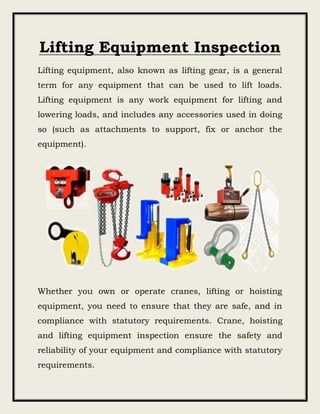
In the world of industrial operations, lifting equipment is the backbone of material handling. Cranes, hoists, slings, shackles, and spreader beams are relied upon daily to move massive loads safely and efficiently. However, the reliability of this equipment is only as strong as the inspection protocols governing its use. A single overlooked defect—a frayed wire rope, a deformed hook, or a worn shackle pin—can escalate into catastrophic failure, causing injury, fatality, and significant financial loss. This guide outlines the essential steps for conducting a thorough pre-use inspection of lifting equipment, equipping operators and site managers with the knowledge to uphold the highest safety standards.
Why Pre-Use Inspections Matter
Pre-use inspections are not merely regulatory formalities; they are the first line of defense against equipment failure. Unlike periodic third-party inspections, which occur at defined intervals, a pre-use check is performed by the operator immediately before each use. This process identifies damage that may have occurred between inspections—whether from environmental exposure, unauthorized use, or the cumulative stress of previous lifts. Documenting these checks creates an auditable trail that demonstrates due diligence and compliance with applicable standards such as OSHA, ASME, and ISO regulations.
Establishing a Systematic Inspection Workflow
A consistent, methodical approach ensures no critical component is missed. The following workflow should be applied to every lifting operation:
Component-by-Component Inspection Criteria
Hooks and Shackles
Hooks and shackles bear the brunt of the load and demand close scrutiny. Check for cracks, bends, or twisting in the hook shank. Measure the throat opening against the manufacturer’s specifications—a hook that has opened more than 10 percent beyond its original dimension must be retired. Confirm that the safety latch is present and functions correctly. Shackle pins should be free of thread damage, and bows must show no signs of deformation or excessive wear at contact points.
Wire Rope and Chain Slings
For wire rope, inspect for broken wires, especially in valleys between strands, and check for kinking, bird-caging, or corrosion. Pay particular attention to end fittings, where failures are most common. Chain slings require inspection for stretched links, gouges, cracks, or wear exceeding 10 percent of the link diameter. Reject any chain with twisted or welded links not meeting specification.
Web and Synthetic Slings
Web slings should be examined for cuts, tears, snags, and UV degradation, which manifests as fading or stiffening. Look for missing or illegible tags and ensure the stitching is intact. Any sling showing burns, chemical damage, or knotting should be immediately removed from service.
Lifting Beams and Spreaders
Check structural welds for cracks, verify that all fasteners are secure, and inspect attachment points for elongation or wear. Confirm that the load rating is clearly marked and legible.
Functional and Operational Checks
Beyond visual inspection, operators must verify that the equipment functions as intended. For powered lifting devices, test the brake system under a light load, confirm that limit switches engage properly, and listen for unusual noises or vibrations that could indicate internal wear. Check that control mechanisms respond smoothly and that emergency stop functions are operational. For manual equipment, verify that locking pins engage, ratchets function, and moving parts operate without binding.
Documentation and Tagging Requirements
Every pre-use inspection should be recorded, including the date, time, equipment identifier, inspector’s name, and the condition status. Equipment that fails inspection must be immediately tagged with a clear “Do Not Use” label, removed from the work area, and reported to the responsible supervisor. The following table summarizes the standard disposition criteria:
| Minor cosmetic wear, fully functional | Approved for continued use |
| Worn but within manufacturer tolerance | Approved with documented monitoring |
| Crack, deformation, or excessive wear | Removed from service, tagged, reported |
| Missing or illegible identification tag | Removed from service until identification is verified |
Common Inspection Pitfalls to Avoid
- Rushing the visual check. Habit and familiarity cause operators to overlook subtle defects; always inspect as though the equipment is new.
- Ignoring the environment. Equipment used in corrosive, high-heat, or outdoor environments degrades faster and warrants heightened scrutiny.
- Skipping documentation. Undocumented inspections cannot be verified and undermine safety accountability.
- Continuing use after a defect is found. Even minor findings must be evaluated against specifications before continued operation.
Conclusion
Pre-use inspection of lifting equipment is a professional obligation that safeguards personnel, equipment, and operational continuity. By following a systematic workflow, applying component-specific criteria, and enforcing rigorous documentation and tagging practices, organizations transform safety from a policy statement into a daily practice. Operators who treat every pre-use check with diligence become the most reliable guardrail against lifting failures—protecting lives and preserving the integrity of every lift.
Leave a Reply