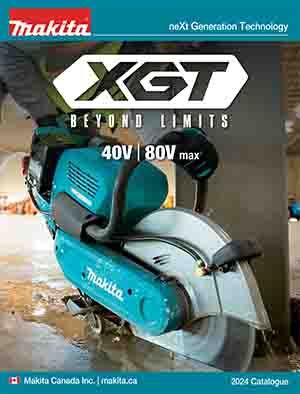
Power tools have long been the backbone of professional trades and serious DIY projects alike. But the industry is no longer defined solely by raw torque and revolutions per minute. Today, manufacturers are fusing battery chemistry, brushless engineering, smart connectivity, and advanced safety systems into tools that are lighter, more efficient, and more capable than ever before. For professionals who depend on their equipment every day, understanding these innovations is essential to staying competitive. This article examines the most significant advancements reshaping the power tool landscape.
The Brushless Motor Revolution
At the heart of modern power tool performance is the brushless motor. Unlike traditional brushed motors, which rely on carbon brushes to transfer current to a spinning commutator, brushless designs use electronic controllers to manage magnetic fields directly. The result is a cascade of benefits that professionals have quickly come to appreciate.
- Greater efficiency: Brushless motors convert more electrical energy into mechanical output, translating to longer runtime per battery charge.
- Extended lifespan: Eliminating brush wear removes one of the most common failure points in cordless tools.
- Compact form factor: Reduced internal components allow manufacturers to design slimmer, better-balanced tools.
- Superior heat management: Lower friction means cooler operation during sustained heavy-duty use.
What was once a premium feature reserved for flagship models has now become standard across mid-range platforms, signaling how quickly the technology has matured.
Advanced Battery Platforms and Fast Charging
Battery technology remains the single largest driver of cordless tool innovation. Lithium-ion cells continue to evolve, but the more significant shift is happening at the system level. Manufacturers are engineering smarter battery packs with integrated communication chips that monitor cell temperature, current draw, and state of charge in real time.
Key Developments in Battery Systems
These innovations mean fewer breaks on the job site and lower long-term ownership costs, a critical consideration for contractors managing fleet budgets.
Smart Connectivity and IoT Integration
The Internet of Things has arrived on the job site. A growing number of professional-grade tools now feature Bluetooth or Wi-Fi connectivity, enabling them to communicate with mobile applications and cloud platforms.
| Tool tracking | GPS and Bluetooth location monitoring | Reduces loss and theft on large sites |
| Usage analytics | Logs runtime, torque events, and duty cycles | Informs maintenance scheduling |
| Remote diagnostics | Flags fault codes and performance anomalies | Minimizes unplanned downtime |
| Firmware updates | Over-the-air performance improvements | Extends tool relevance over time |
For fleet managers, this data is transformative. Instead of reactive repairs, teams can adopt predictive maintenance, servicing tools before failure occurs and keeping crews productive.
Next-Generation Safety Systems
Safety innovation has accelerated dramatically in response to regulatory pressure and genuine concern for worker welfare. Several technologies once confined to laboratory demonstrations are now shipping in production tools.
- Anti-kickback detection: Sensors monitor sudden rotational changes and cut power in milliseconds to prevent wrist and arm injuries.
- Electronic blade brakes: Saws now stop cutting edges in fractions of a second after trigger release.
- Flesh-detection technology: Table saws equipped with capacitive sensing can halt the blade on contact with skin, dramatically reducing severe laceration risk.
- Vibration dampening: Engineered isolation systems reduce hand-arm vibration exposure, lowering the risk of long-term conditions such as HAVS.
These systems represent a meaningful step forward: safety is no longer a trade-off against performance but an integrated part of the tool’s engineering.
Ergonomics and User-Centered Design
Manufacturers are investing heavily in how tools feel. Computational modeling and human-factors research now guide grip geometry, weight distribution, and control placement. Compact brushless motors allow for shorter tool bodies, improving access in tight spaces. Variable-speed triggers with finer resolution give users more precise control over delicate materials. Rubberized overmolds and improved balance points reduce fatigue during extended overhead work, a persistent concern in electrical and HVAC trades.
The Road Ahead
The trajectory is clear: power tools are becoming smarter, safer, and more efficient with each product cycle. Solid-state battery research promises another leap in energy density, while AI-assisted controls may soon adapt torque and speed automatically to the material at hand. For professionals, the practical takeaway is straightforward: investing in current-generation technology delivers measurable gains in productivity, safety, and total cost of ownership. The tools of tomorrow are already arriving, and they are built on the innovations of today.
Leave a Reply