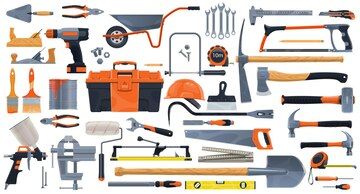
Walk into any hardware store or browse an online marketplace, and you will quickly notice two distinct tiers of products: the tools marketed to tradespeople and the tools marketed to homeowners. At first glance, they often look similar. A drill is a drill, a saw is a saw. But the differences run far deeper than the paint color or the price tag. Understanding what separates professional-grade tools from DIY-grade tools is essential for making smart purchasing decisions, whether you are a contractor equipping a crew or a homeowner planning a weekend project.
The Core Distinction: Duty Cycle and Design Intent
The fundamental difference between professional and DIY tools comes down to design intent. Professional tools are engineered for continuous, heavy-duty use in demanding environments. DIY tools are engineered for occasional use on lighter tasks. This distinction influences every design decision, from the materials selected to the motor specifications to the quality control standards applied during manufacturing.
Manufacturers assume that a professional tool may run for six to eight hours a day, five or six days a week. A DIY tool, by contrast, may run for a few hours on a Saturday and then sit in a garage for months. That difference in expected workload drives everything else.
Key Differences at a Glance
| Motor and power | Higher torque, brushless motors, sustained output | Adequate torque for light tasks, often brushed motors |
| Build materials | Metal gearboxes, reinforced housings, sealed bearings | Plastic housings, lighter internal components |
| Duty cycle | Rated for continuous daily use | Rated for intermittent, occasional use |
| Precision | Tight tolerances, accurate adjustment mechanisms | Acceptable tolerances for general tasks |
| Serviceability | Replaceable parts, available spares, repair-friendly | Often sealed units, limited repairability |
| Warranty | Commercial warranties, longer coverage terms | Consumer warranties, shorter coverage terms |
| Price | Premium, justified by lifespan and performance | Accessible, optimized for entry-level budgets |
Power, Performance, and Durability
Professional tools typically feature more robust motors, metal gearboxes, and higher-quality bearings. These components allow them to deliver consistent power under load and to withstand the heat and vibration that come with extended operation. A professional cordless drill, for example, often uses a brushless motor that runs cooler and more efficiently than the brushed motors common in DIY models.
Durability follows the same logic. Where a DIY tool might use a plastic housing and sintered gears, a professional tool often uses reinforced composites, cast metal components, and sealed switches rated for dust and moisture. The result is a tool that maintains performance over years of hard use rather than degrading after a season of light projects.
Precision and Accuracy
For tradespeople, precision is not a luxury—it is a requirement. A cabinetmaker needs a saw that cuts square every time. An electrician needs a multimeter with reliable, calibrated readings. Professional tools are manufactured to tighter tolerances and include adjustment mechanisms that hold their settings through repeated use. DIY tools generally offer acceptable accuracy for general tasks, but they may drift out of adjustment more easily and lack the fine-tuning features professionals rely on.
Serviceability and Long-Term Cost
One of the most overlooked differences is serviceability. Professional tools are designed to be repaired. Bearings, brushes, switches, and cords are often replaceable, and manufacturers supply spare parts for years after a model is discontinued. This extends the tool’s lifespan and lowers the total cost of ownership over time.
DIY tools are frequently sealed units. When they fail, replacement is usually more economical than repair. For occasional users, that trade-off makes sense. For professionals who depend on their tools daily, downtime and replacement costs add up quickly, which is why the higher upfront price of professional equipment often pays for itself.
Warranty and Support
Warranty terms reflect the manufacturer’s confidence in the product and its intended use. Professional tools commonly carry commercial warranties with longer coverage periods and dedicated service networks. DIY tools typically carry consumer warranties that are shorter and may exclude heavy or commercial use. If you plan to use a tool to earn money, check the warranty terms carefully—using a consumer-grade tool commercially can void its coverage.
Which Should You Choose?
The right choice depends on how often and how hard you will use the tool. Consider the following guidelines:
- Choose professional tools if you use the tool daily, depend on it for your livelihood, need consistent precision, or want long-term serviceability.
- Choose DIY tools if your projects are occasional, your budget is limited, or the tool will see light, intermittent use.
- Consider a hybrid approach—invest in professional-grade tools for the equipment you use most, and choose DIY-grade tools for tasks you perform rarely.
It is also worth noting that the gap between the two tiers is not always absolute. Some manufacturers produce “prosumer” lines that blend professional features with consumer pricing. Reading specifications carefully—motor type, duty cycle, materials, and warranty terms—will tell you more than the label on the box.
Conclusion
Professional tools and DIY tools are not simply good and better versions of the same thing. They are purpose-built for different users, different workloads, and different expectations. Professional tools prioritize durability, precision, and serviceability for daily, demanding use. DIY tools prioritize accessibility and value for occasional projects. Understanding these differences empowers you to match your investment to your actual needs—and to avoid both the frustration of underpowered equipment and the expense of capability you will never use.
Leave a Reply